
The future of smile makeovers will not be built on aligners alone. Dentistry’s next disruption is hiding in plain sight.
OPINION | Dr John Hagiliassis
Clear aligners have already disrupted dentistry once. I believe they are about to do it again.
“Disruption displaces an existing market, industry, or technology and produces something new and more efficient and worthwhile. It is at once destructive and creative.”
— Professor Clayton Christensen, Harvard Business School
The first disruption was product-led. Patients discovered that orthodontic treatment did not have to mean metal brackets and wires. They could straighten their teeth with something discreet, removable and aesthetic. That single shift changed patient expectations forever. But the next disruption will not be about aligners alone. It will be about integration.
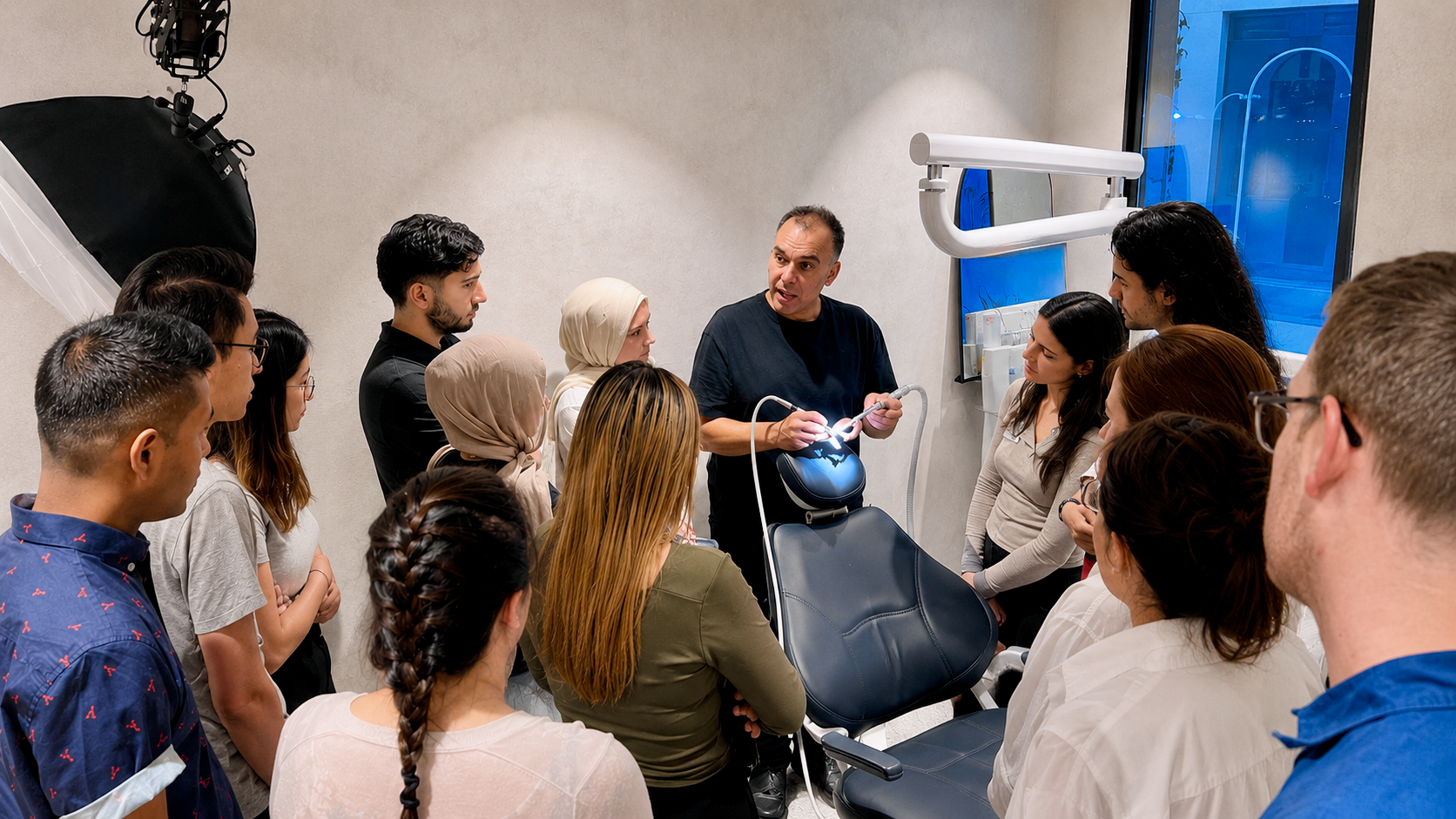
It will be about bringing education, digital planning and dental laboratory manufacturing together in one connected ecosystem. It will be about giving dentists the knowledge, systems and clinical support to deliver smile makeovers that are not only beautiful, but conservative, planned and predictable.
For decades, aesthetic dentistry has too often been divided into silos. Orthodontics lived in one world. Restorative dentistry lived in another. Dental laboratories were often brought in at the end of the process rather than integrated from the beginning. Digital planning tools promised a great deal, but were not always connected to the education, clinical decision-making and manufacturing pathways required to bring those plans to life. In my view, that is where the next major evolution lies:
The future of aesthetic orthodontics and smile design will be built on three pillars: education, digital planning and dental laboratory manufacturing of appliances. And when those three pillars work together, I believe they have the potential to fundamentally change what general dentists can deliver.
Clear aligners changed the market because they were highly advertisable, highly desirable and highly systemised. They gave patients a treatment option that felt modern, aesthetic and accessible. They also opened the door for adults who may never have considered orthodontic treatment before.
Depending on the study, a significant percentage of adults are unhappy with the alignment of their teeth. Yet many of those patients were never going to accept metal braces. Ceramic braces helped some people cross that threshold, but they did not create true disruption. Clear aligners did.
The rise of direct-to-consumer aligner companies further proved the point. Whether we like that model or not, it demonstrated something important: patients want aesthetic orthodontic solutions, and they want them to feel simple, convenient and understandable. But simplicity for the patient should never mean oversimplification of the diagnosis. That is where dentistry must lead.
Clear aligner therapy is not just a product. It is not simply a sequence of plastic trays. When used properly, it is a clinical tool that can help us improve tooth position, smile proportion, restorative outcomes and facial balance. When used poorly, it risks becoming a commodity. As dentists, we should not allow that to happen.
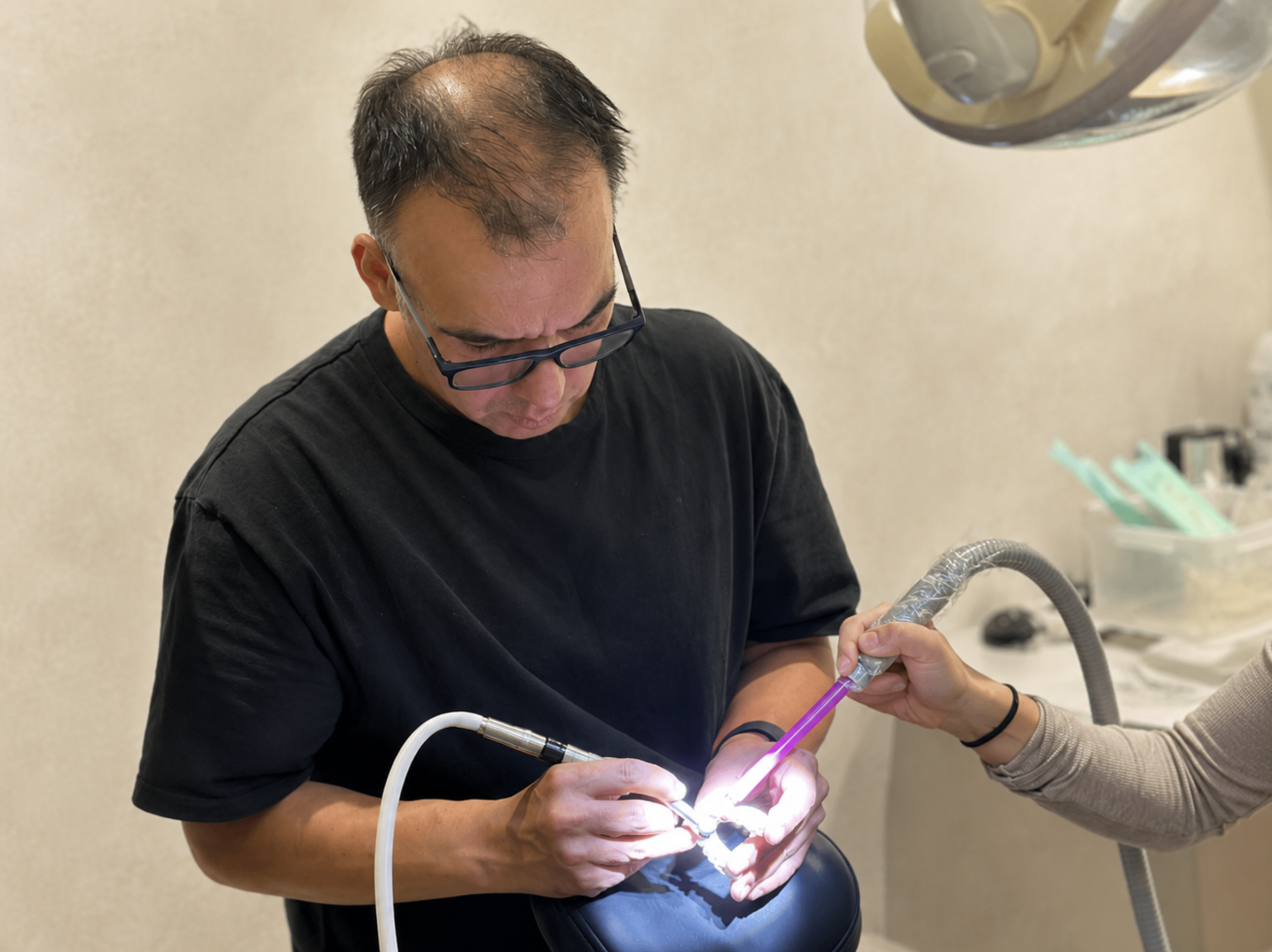
We are living in an unprecedented time. Patients are asking for clear aligners. They are actively seeking aesthetic improvement. They are more informed, more visually aware and more exposed to smile makeover marketing than ever before. At the same time, we have access to technologies that allow us to diagnose, simulate, plan and manufacture with a level of precision that was not previously possible. The challenge is that technology alone is not enough:
A scan is not a diagnosis. A simulation is not a treatment plan. And an aligner is not a smile makeover.
For clear aligners to play their proper role in aesthetic dentistry, dentists need education that goes beyond tooth movement alone. We need to understand facial aesthetics, smile design, tooth proportions, occlusion, restorative sequencing, interproximal reduction, enameloplasty, whitening, bonding and retention. We need to know when to move teeth, when to restore teeth and when to do both. This is why education must be the first pillar.
Many dentists are interested in clear aligner therapy, but interest is not the same as confidence. Confidence comes from understanding principles, systems and risk. It comes from knowing how to assess a case properly, communicate with the patient clearly, and plan treatment in a way that is biologically respectful and aesthetically driven.
In my opinion, clear aligners should not be viewed as an alternative to restorative dentistry. They should often be viewed as the treatment that makes restorative dentistry more conservative. We should no longer be offering overly thick veneers or bonding to disguise poor tooth position. We should not be excessively preparing teeth simply to create the illusion of alignment. And we should not be leaving smile design to direct-to-consumer companies that cannot properly assess tooth colour, tooth shape, gingival architecture, occlusion, restorative needs, soft tissue balance or long-term stability.
The second pillar is digital planning. Digital planning allows us to move beyond guesswork. It allows us to analyse tooth-size discrepancies, plan interproximal reduction, assess symmetry, visualise space creation, simulate alignment, and communicate clearly with the patient before treatment begins. But digital planning must be clinically led. The software should support the dentist’s diagnosis, not replace it.
One of the most powerful aspects of digital planning is its ability to help patients understand the “why” behind treatment. Many patients know they dislike their smile, but they cannot always explain what is wrong. They may describe their teeth as crooked, uneven, narrow, bulky or unbalanced. Through proper digital planning, we can show them the relationship between tooth position, shape, colour, proportion and smile width. That conversation changes everything.
It allows the patient to see why whitening alone may not solve the problem. It allows them to understand why bonding without alignment may create bulk. It allows them to appreciate why small amounts of tooth movement and carefully planned interproximal reduction may produce a more natural and conservative result.
The third pillar is dental laboratory manufacturing of appliances. This is critical because planning only matters if it can be translated into accurately manufactured appliances. The appliance is the physical expression of the digital plan. If the plan, education and manufacturing are disconnected, the clinician is left trying to bridge gaps between systems.
In the future, I believe dentists will increasingly look for integrated pathways where the clinical philosophy, digital planning and appliance manufacturing are aligned from the outset. That does not remove the dentist from the process. It empowers the dentist to make better decisions and deliver more predictable care.
A recent case from my own practice demonstrates why this matters. A female patient in her mid-twenties came to see me for a second opinion. She had just completed orthodontic treatment with a specialist, during which tooth 32 had been removed. Although she agreed that her teeth were straighter, she was still unhappy with her smile. This is an important distinction. Straight teeth and a beautiful smile are not always the same thing.
As with all cases, we began with a thorough patient interview. I wanted to understand her concerns, her expectations and what she wanted to change. From there, we completed a comprehensive diagnostic process. Clinically, she had no signs of decay, no impacted wisdom teeth and sound periodontal health. Her lower left lateral incisor was missing, and she had composite resin augmentation on the mesial of tooth 11.
From a facial aesthetic perspective, her horizontal facial thirds appeared equal, while her vertical fifths were uneven, with the left maxillary region appearing wider. Her smile line canted upward towards the left compared with the interpupillary line. Periorally, the lip also canted upward to the left.
Dentally, the maxillary central incisor midline coincided with the facial midline, but the lower midline was displaced to the left because of the missing tooth 32. Using tooth charting software and Bolton’s analysis, we identified that tooth 11 was 0.74 mm wider than tooth 21, largely due to the existing composite augmentation. Tooth 22 was 0.1 mm wider than tooth 12, and tooth 12 also had a worn incisal edge. Teeth 13 and 23 were also slightly disproportionate, with tooth 23 being 0.2 mm wider than tooth 13. These may sound like small measurements. But in aesthetic dentistry, small discrepancies can have a major visual impact.
Because the patient had just finished fixed orthodontic treatment, it would have been easy to assume orthodontics was no longer an option. I do not believe we should make that assumption. Sequential aligner therapy, when applied using aesthetic orthodontic principles, can still be incredibly valuable.
Using digital tools and simulations, we were able to help the patient articulate what she disliked and show how we could address it. Her primary concerns were not the upper lip cant. She was more concerned about the disproportionate shape of tooth 11 compared with tooth 21, the uneven incisal edges of teeth 12 and 22, the colour of her teeth and the overall breadth of her smile.
We discussed several treatment options. These included digital smile design with upper anterior veneers and whitening of the remaining teeth; sequential aligner therapy with interproximal reduction to improve the proportions of the upper anterior teeth; whitening only; and composite bonding with strategic enameloplasty. Ultimately, the treatment plan combined sequential aligner therapy, interproximal reduction, whitening, enameloplasty and additive composite bonding.
Before beginning, it was essential to discuss the risks and considerations clearly. With any aesthetic orthodontic plan, patients need to understand compliance requirements, alternative treatment options, possible recession, periodontal considerations, relapse, whitening maintenance, lifelong retention, the risk of bonding debonding or staining, and the rare but serious risk of pulpal complications.
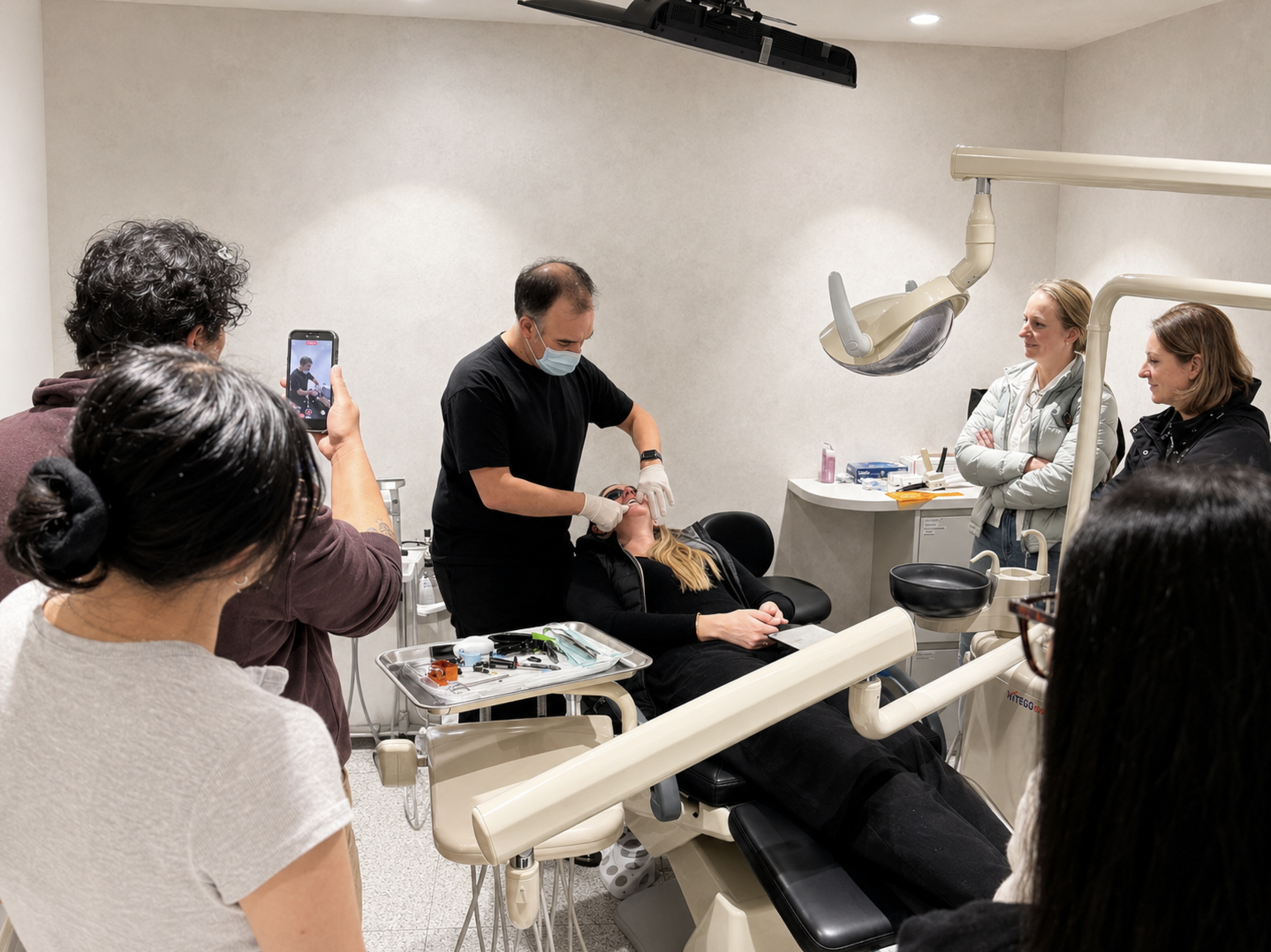
In this case, treatment involved six months of sequential aligner therapy with 14 aligners. We performed 0.7 mm of interproximal reduction between teeth 11 and 21, primarily on tooth 11 where the existing mesial composite was located. The interproximal reduction was completed initially using an NSK handpiece, then recontoured with Sof-Lex discs to preserve the anatomical form. The space was measured using interproximal reduction gauges of 0.5 mm and 0.2 mm.
One detail I believe is critical: I spent time speaking with the patient before and after interproximal reduction so she knew exactly what to expect. In particular, she needed to understand that she would leave the clinic with a visible space between her front teeth. That conversation is not optional. It is part of good consent, good communication and good clinical care. Once alignment was complete, we reassessed the finishing options. We proceeded with in-chair tooth whitening, enameloplasty on teeth 13, 11, 21 and 23, and composite augmentation of teeth 12 and 22.
The result was achieved over nine months using a combination of sequential aligner therapy, external tooth whitening, enameloplasty, interproximal reduction and composite bonding. Although her teeth were not severely malaligned at the beginning, we were able to create a treatment plan that improved symmetry, buccal corridors and overall facial balance. But most importantly, the result has been reviewed and has remained stable for three years. For me, this case represents where modern smile makeover dentistry should be heading.
The future is not about choosing between orthodontics and restorative dentistry. It is about combining them intelligently. It is about using clear aligners to place teeth in a better position before restoring them. It is about using interproximal reduction conservatively and precisely. It is about improving proportions before reaching for ceramic or composite. It is about preserving tooth structure wherever possible. But for more dentists to do this confidently, we need more than products:
We need education that teaches the principles. We need digital planning that supports the diagnosis. And we need appliance manufacturing that brings the plan to life.
When those three pillars are integrated, clear aligner therapy becomes more than a treatment option. It becomes part of a complete smile makeover system. That is what excites me about what is coming next.
The next chapter of clear aligner dentistry will not be defined by who can make another aligner. It will be defined by who can help dentists diagnose better, plan better, communicate better and deliver better outcomes for patients.
The public already understands that clear aligners can move teeth. Now it is time for the profession to show what clear aligners can really do when they are placed inside a complete aesthetic, restorative and digital workflow.
That is the next disruption. And this time, I believe dentists should lead it.
To learn more about what is coming next in clear aligner education, digital planning and appliance manufacturing, visit followthegeni.com and follow the journey.
About Dr John
Dr John Hagiliassis is a highly respected clinician, educator and entrepreneur with a distinguished career spanning general, cosmetic and orthodontic dentistry. Since graduating from The University of Melbourne in 1995 with a Bachelor of Dental Science, John has built a reputation for clinical excellence, innovation and a deep commitment to advancing the dental profession.
With extensive postgraduate training in restorative and cosmetic dentistry, John has continually refined his expertise to remain at the forefront of modern clinical practice. In 2016, he was among the first graduates of the Graduate Diploma in Orthodontics for clear aligner therapy, reflecting his early commitment to one of dentistry’s fastest-evolving treatment areas.
As an educator, John has lectured and mentored widely, supporting both emerging dentists and experienced practitioners seeking to expand their skills. His teaching is grounded in real-world clinical experience, clear communication and a genuine commitment to helping clinicians build confidence, improve patient outcomes and deliver treatment they can be proud of.
John’s leadership in clear aligner therapy has been recognised at the highest levels. In 2011, he was awarded Invisalign Platinum Elite Provider status, and in 2019 he received a Lifetime Achievement Award from Invisalign after completing more than 3,000 Invisalign cases. His work has also been published in international case galleries as a leading example of what can be achieved through advanced clear aligner treatment.
Driven by a passion for technology, education and clinical excellence, John has introduced a number of innovations that have helped shape the future of dentistry in Australia. He was among the first practitioners in the country to adopt the iTero digital impression system, demonstrating the forward-thinking approach that continues to define his work as a clinician, mentor and dental entrepreneur.